eyeOT launches eyeOT planner, a security design tool that checks the design before the crew shows up
Start from the RFP, design on real floor plans and 3D scans, and catch PoE, port, storage and coverage problems while you design. The BOM, labor and quote come from the same design.
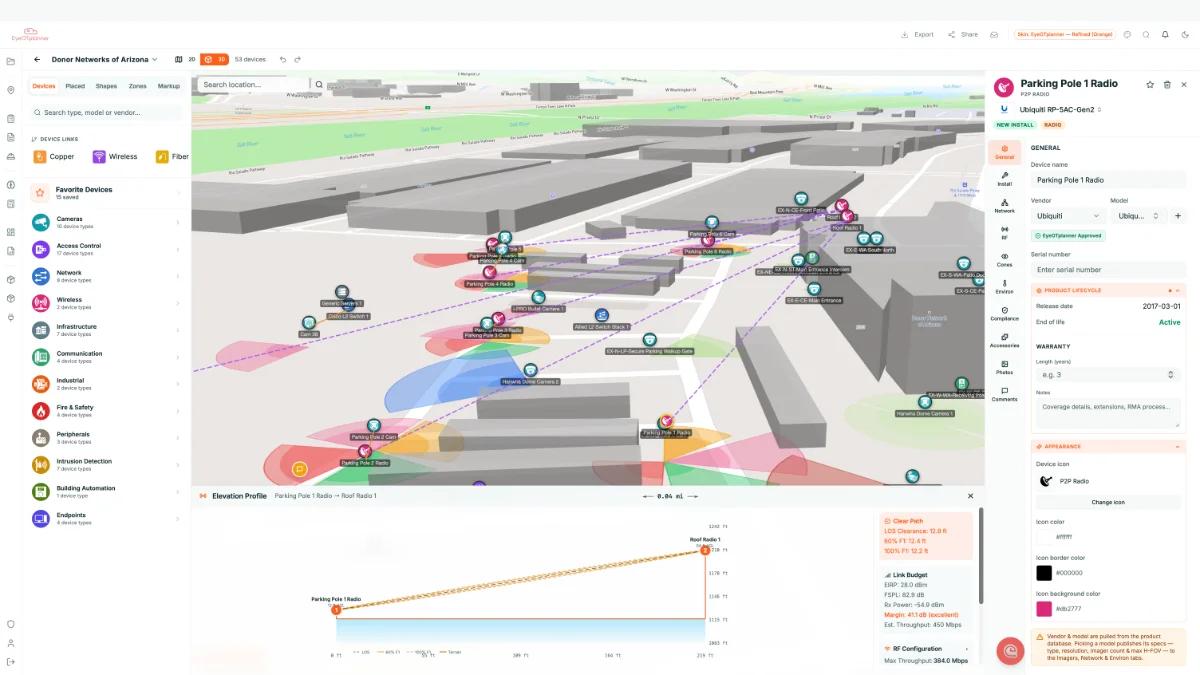
Chicago, IL, July 20, 2026: eyeOT today announced the general availability of eyeOT planner, a design and estimating tool for security integrators, designers and consultants. eyeOT planner knows the specifications of every device in a design, so it can check the design as it is built: whether a switch has the ports and PoE budget for the cameras on it, whether a recorder can hold the required days of video, and whether a camera covers what it's meant to cover.
Most design tools are, in eyeOT co-founder Kirill Sokolinsky's words, "all about dragging icons and creating sticks from one icon to the next." The lines don't check anything. Designers count switch ports, add up PoE draw and size storage by hand, one device at a time. On a large warehouse or campus with hundreds of cameras, the misses surface after the order is placed and the crew is on site, and the integrator pays to fix them.
Start with what you have - RFP, Site Images, Site-Walk Notes
A project can start from the documents the integrator already has. Upload an RFP, a customer requirements document or the sales rep's notes from the job walk, and eyeOT planner pulls out what the job calls for: the camera counts, brands, VMS, access control platform, parts and quantities, and the due dates. It returns a summary before anyone places a device.
When the design is done, a design analysis compares it against the RFP and scores it. If the design is at 80% rather than 100%, eyeOT planner lists what's missing: cameras the spec calls for, a switch that's short, storage that falls below the requirement, or a PoE budget that's exceeded.
Design on the real site
Sites can be built from a Google Earth map, a floor plan or blueprint, or a 3D scan taken with the LiDAR on a phone during the job walk. Cameras can be placed inside the scan, and clicking a camera shows the view it will have. On the Google Earth map, Street View shows what a pole camera will see, and the design shows pixels per meter as the distance from the camera grows.
eyeOT planner knows specifications for every device
eyeOT planner's catalog covers cameras, switches, wireless, servers, storage and VMS platforms from many manufacturers. Each device type carries the properties that matter for it: resolution, frame rate and PoE draw for a camera; port count, port speed, SFPs and PoE budget for a switch; the number of doors a controller supports. Devices are marked active or end of life.
If a product isn't in the catalog, type the model number and eyeOT planner finds the datasheet online and fills in the specifications, or upload the datasheet directly. Teams can build their own catalog of the products they use.
The design checks itself for mistakes, omissions or misinformation
- Ports and power. When a camera is connected to a switch port, eyeOT planner knows that port is now in use and adds the camera's PoE draw to the switch's budget.
- Storage and bandwidth. Change the retention days, frame rate or resolution and the storage required changes with it, including RAID 5 or RAID 6.
- Servers. A recording dashboard shows the cameras assigned to each server and the total throughput, so the number of servers and the storage are sized from the design.
- Network. Switch counts and cabling are worked out from the devices placed.
- Power. UPS and battery requirements for the devices in the design.
From design to quote
Labor is built into the design. Teams set labor roles and hourly rates, and install times by device type, for example one hour for an indoor camera and two for a PTZ, and eyeOT planner works out the labor for the job. The bill of materials, software and labor come together in a branded quote on the integrator's own letterhead.
Reports can include the view from each camera. Designs export to PDF, Bluebeam and KMZ, or can be shared with the customer as a link. The customer can view the design and leave comments, such as moving or removing a camera, without needing a license.
Who it's for
- Estimators and designers. Who carry the risk when a design doesn't work in the field, and currently check ports, power and storage by hand.
- Sales teams. Who walk the site and want the scan, notes and RFP to become the start of the design.
- Consultants and engineers. Who write the spec and need to show coverage, paths and where the rack goes.
- Project managers. Who need the quote and the installation to come from the same design.
When we bring in a switch, we want to know everything about that switch. How many ports does it have, what's the speed of those ports, does it need SFPs, what PoE can it provide to cameras. So when you add a camera to a port, you know that port is in use, and that camera draws six watts. We're giving you that intelligence so you can make the mistakes in the tool instead of in the field.
Kirill SokolinskyCo-founder and COO, eyeOT
eyeOT planner is part of the eyeOT platform, which monitors and manages security and IT infrastructure after installation.
Availability
eyeOT planner is available now by subscription, with plans that differ by the number of devices per project. The Expert plan adds 3D scan import and rack design. Teams can sign up and start a free trial at eyeot.ai.
About eyeOT
eyeOT helps security integrators, MSPs, and IT and OT teams see, understand and manage the infrastructure behind their security systems: cameras and video management systems, access control, networks, servers and power. eyeOT planner checks system designs against real device data before installation, and the eyeOT platform monitors and manages those systems after. Founded in 2019, eyeOT sells only through channel partners, is SOC 2 Type II audited, and is available in the cloud or on-premises. Learn more at eyeot.ai.
Media contact
Jaci HoffmanneyeOTpress@eyeotmonitor.com