Single outbound access
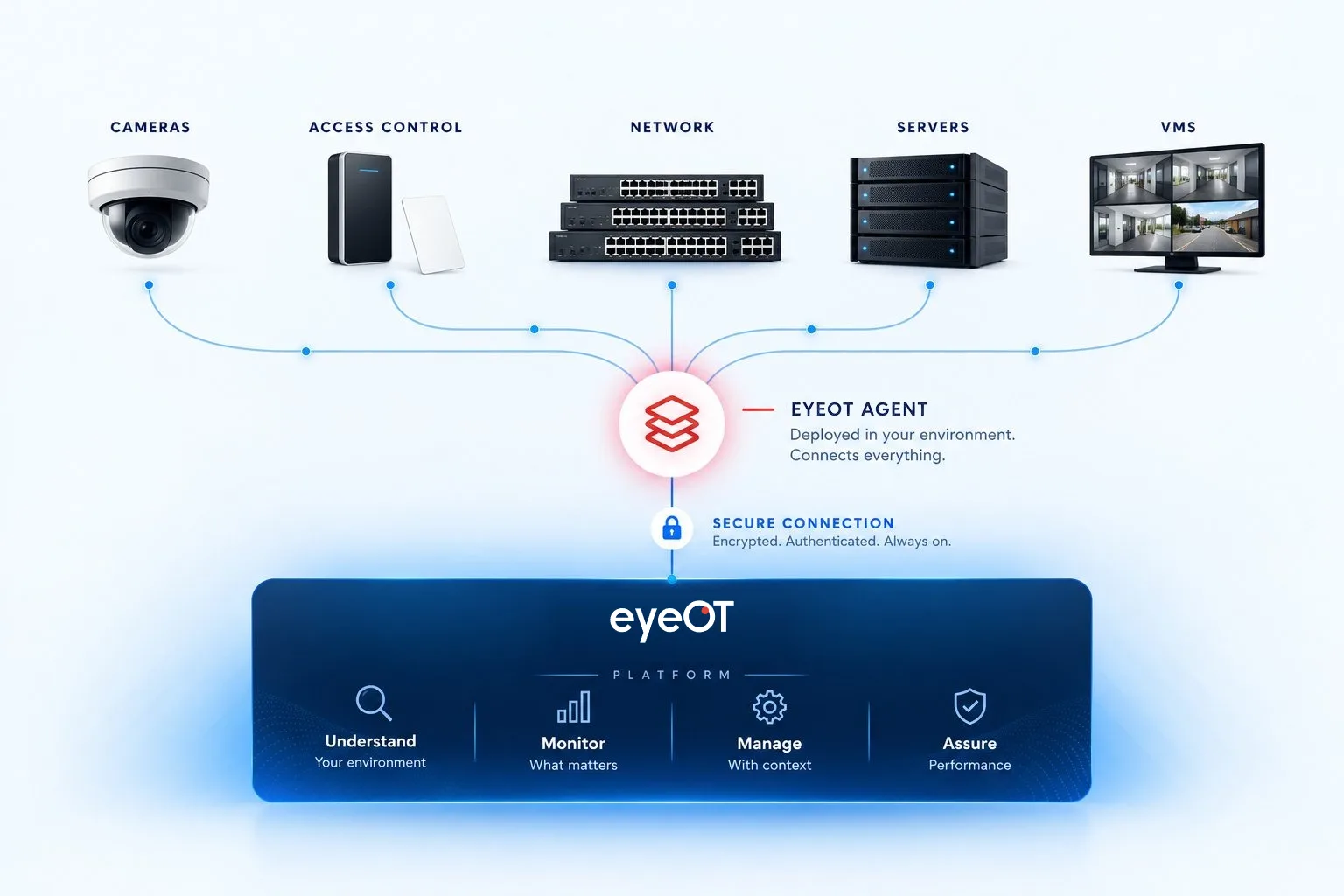
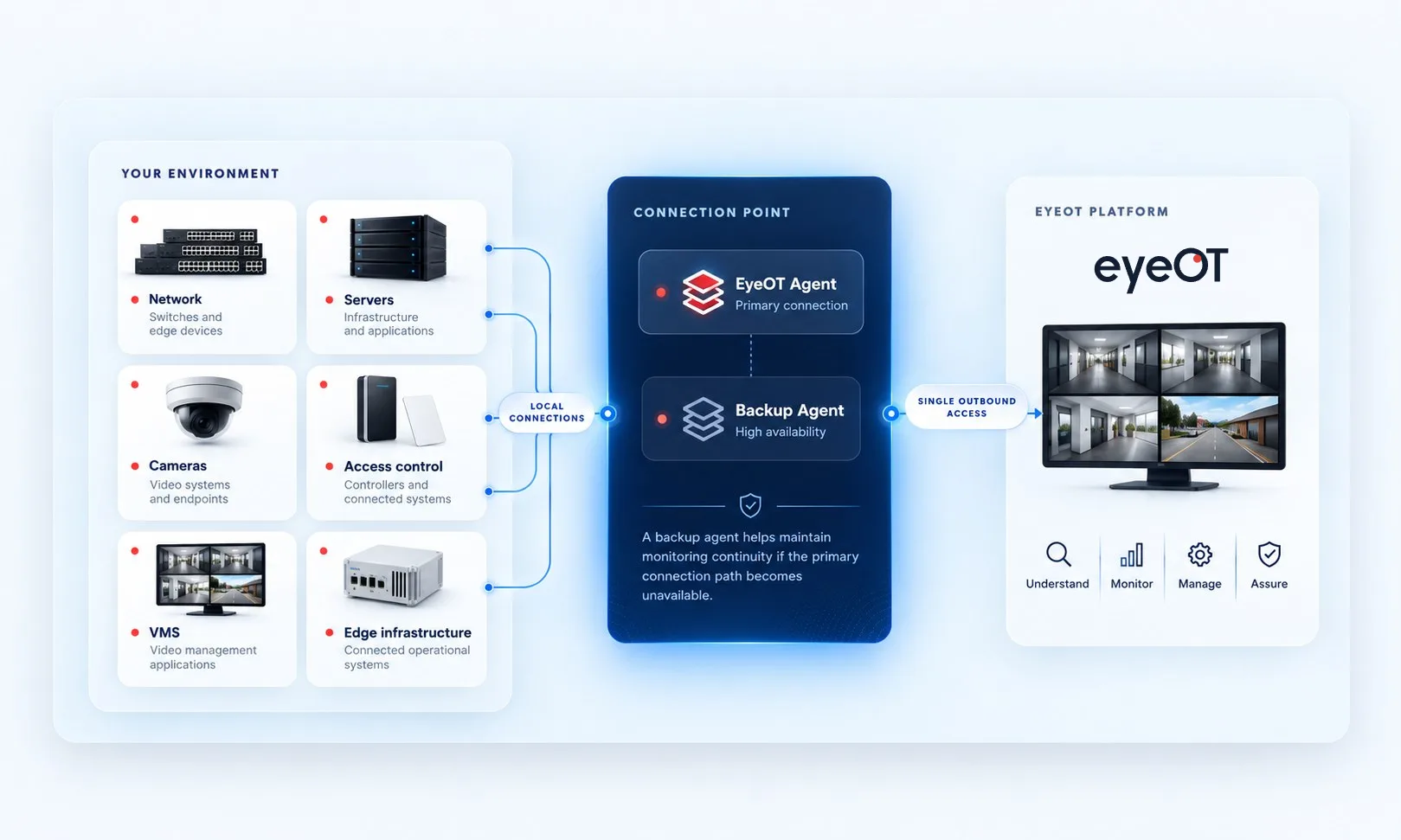
Centralize platform connectivity through the eyeOT Agent rather than requiring supported devices to establish their own connection to eyeOT.
Security & Architecture
Run eyeOT on-premises or in the cloud. One agent connects supported infrastructure and physical security systems through a centralized connection point, helping your team monitor and manage the environment without requiring every device to connect independently to the platform.
How eyeOT Connects
eyeOT creates a centralized connection point between the systems you already operate and the platform. Supported devices stay inside the environment while the eyeOT Agent provides the path to eyeOT.
1K+
Once the agent is connected, discovery can bring large environments into eyeOT without device by device setup.
Built for real environments
eyeOT is designed to fit the environment you already operate. Choose the deployment model, connectivity approach and availability requirements that make sense for your network and physical security systems.
Centralize platform connectivity through the eyeOT Agent rather than requiring supported devices to establish their own connection to eyeOT.
Run eyeOT in the cloud or deploy it inside your own network based on the operating and architecture requirements of the environment.
Use a backup agent to support monitoring continuity if the primary agent or connection path becomes unavailable.
Manage complex environments across locations and customers from one operational platform while keeping each environment organized.
eyeOT does not start with a rip and replace architecture. Deployment can be reviewed against your network, sites, connected systems and connectivity requirements before rollout.
Access controls
Control how people sign in, what they can see and which remote tools they can open, across every site and customer.
Sign in to eyeOT through your identity provider, so access follows your existing accounts and offboarding.
Choose which remote-access tools, such as RDP, SSH, Telnet and web sessions, each user is allowed to open.
Give stakeholders and customers a view of their environment without the ability to change settings or run actions.
Independent Assurance
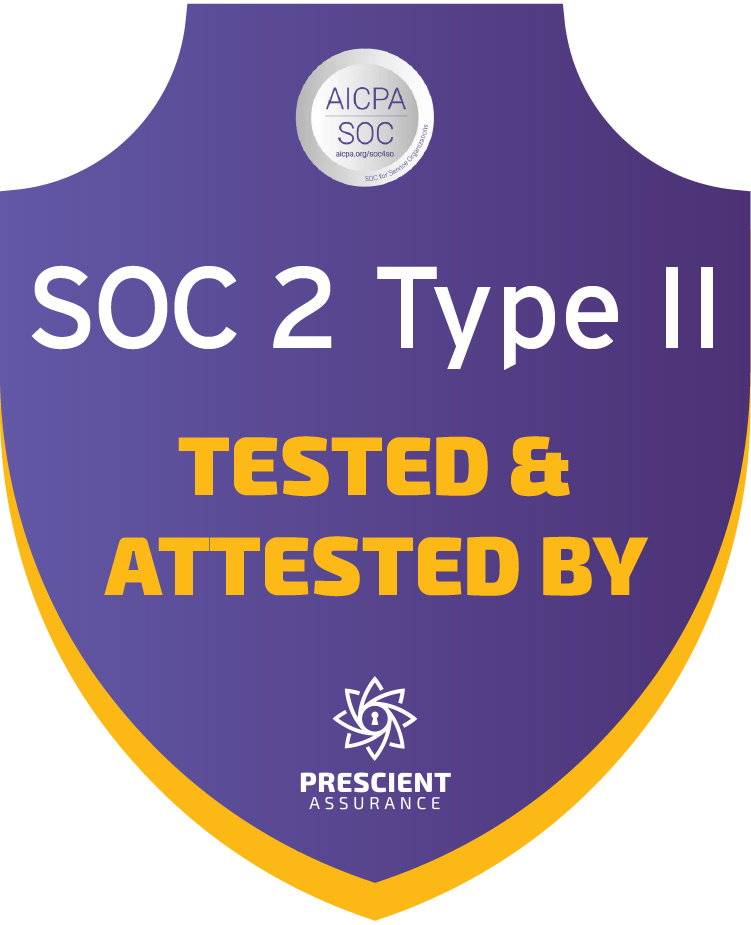
eyeOT has completed a SOC 2 Type II examination, providing independently evaluated controls that enterprise teams, integrators and managed service providers can include in their vendor and security review.
Security Review
Security, IT, OT and procurement teams can review the architecture, connectivity and deployment requirements that apply to their environment before rollout.
Contact UsReview agent deployment, outbound connectivity, proxy requirements and cloud or on-premises architecture.
Review data flows, credentials, access requirements and connected system considerations for the capabilities you plan to use.
Walk through primary and backup agent requirements, failover and monitoring continuity for your environment.
Request SOC 2 Type II documentation and bring the vendor security questionnaire your organization or customer requires.
FAQ
No. The eyeOT Agent provides the centralized connection point between supported systems in the environment and the eyeOT platform, so connected devices do not each need an independent connection to eyeOT.
Yes. eyeOT supports cloud and on-premises deployment models. Your team can choose the approach that fits the network, operating and security requirements of the environment.
The eyeOT Agent creates a centralized connection point for supported systems. Proxy support routes outbound connectivity through a centralized location, helping reduce the need for individual devices to connect externally.
eyeOT supports a backup agent for high availability. The backup agent is designed to help maintain monitoring continuity when the primary agent or connection path becomes unavailable. Deployment and failover requirements can be reviewed before rollout.
Yes. eyeOT is designed for multi site and multi tenant operations, allowing teams and managed service providers to organize and manage connected environments from one platform.
eyeOT works across connected infrastructure and physical security environments, including supported network devices, servers, cameras, VMS, access control and edge infrastructure. Coverage depends on the systems and integrations in the environment.
Requirements vary by capability, integration and deployment model. eyeOT can review the applicable data flows, credential requirements, access needs and remote management considerations with your technical team before deployment.
Yes. eyeOT can support a technical and vendor security review, provide available SOC 2 Type II documentation and work through your organization or customer security questionnaire.
Ready when your team is
Bring your architecture, connectivity or vendor security questions to our team and evaluate eyeOT against the environment you actually operate.